AI in Healthcare 2026: The Tipping Point From Experimental to Essential
AI in Healthcare 2026: The Tipping Point From Experimental to Essential
In January 2026, standing before an audience at the Consumer Electronics Show in Las Vegas, FDA Commissioner Marty Makary delivered a message that would have been unthinkable just five years earlier: the agency intended to move at “Silicon Valley speed.” The announcement that the FDA would ease regulation of digital health products — including AI-enabled devices and consumer wearables — marked a defining moment in the relationship between artificial intelligence and American medicine.
2026 is not the year AI arrived in healthcare. It is the year AI stopped being an experiment and started being infrastructure.
The Regulatory Watershed
The FDA’s January 2026 release of final guidances on wearables and AI-enabled devices represented a fundamental philosophical shift. Where previous regulatory frameworks treated AI as a novel, high-risk technology requiring extensive pre-market scrutiny, the new approach explicitly prioritizes innovation speed. Commissioner Makary framed deregulation as essential for investor confidence and American competitiveness — a posture that has drawn both applause from industry and concern from patient safety advocates.
“The FDA’s pullback on oversight of AI-enabled devices and wearables is the most significant regulatory shift in digital health since the 21st Century Cures Act,” noted one STAT News analysis. The practical effect: a faster pipeline from algorithm to clinic, but with questions about long-term safety monitoring still unresolved.
This deregulatory push unfolded alongside the FDA’s February 2026 cybersecurity guidance for medical devices, reflecting the recognition that speed must be balanced against the growing threat surface of connected healthcare infrastructure. The tension between acceleration and safety is now the central challenge of AI governance in medicine.
The Diagnostics Revolution
On the ground, the impact is already measurable. An analysis by American Healthcare Leader catalogued ten AI-driven diagnostics companies that are fundamentally reshaping how disease is detected. These span imaging, pathology, and precision clinical tools — areas where AI’s pattern-recognition capabilities consistently match or exceed human performance.
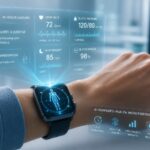
Apple’s Hypertension Notification Feature, which received FDA clearance in late 2025, exemplifies the convergence of consumer wearables and clinical-grade diagnostics. What began as step counters and heart rate monitors has evolved into devices capable of detecting arrhythmias, tracking blood pressure trends, and flagging early warning signs of chronic disease — all without a doctor’s visit.
The digital health market reached approximately $163 billion globally in 2025, with AI, wearables, and remote monitoring as the primary growth engines. Capgemini’s 2026 healthcare analysis describes the shift succinctly: “The future of healthcare is AI-powered, patient-centered, and data-driven.”
From Chatbots to Clinical Decision Support
AI chatbots for patient engagement have moved beyond simple symptom checkers. In 2026, these systems handle appointment scheduling, medication reminders, post-discharge follow-up, and even preliminary triage — freeing clinicians for the complex, human work that machines cannot replicate.
The American Association of Nurse Practitioners identified AI tools that “give clinicians more time with patients” as one of the top five healthcare trends of 2026. The promise is not replacement but restoration: using technology to strip away the administrative burden that has come to define modern medical practice, returning the focus to the patient-clinician relationship.
But the chatbot revolution carries risks. Mental health chatbots, in particular, have drawn scrutiny after incidents where AI responses failed to recognize crisis situations. The FDA’s lighter regulatory touch means these tools can reach market faster, but the burden of post-market surveillance falls heavily on an already strained oversight system.
Robotic Surgery and Precision Medicine
AI-assisted robotic surgery represents perhaps the most visually striking application. Systems like the HYDROS Robotic System, FDA-cleared in late 2025, combine real-time imaging analysis with precision instrument control. The AI does not replace the surgeon — it augments, providing guidance on optimal incision paths, flagging anatomical anomalies, and reducing hand tremor at microscopic scales.
In precision medicine, AI analyzes genomic data at scales that would overwhelm human researchers. By correlating genetic markers with treatment outcomes across millions of patient records, these systems identify which therapies are most likely to work for specific patient subgroups — transforming cancer treatment from a statistical guessing game into a data-driven science.
The Access Question
For all the technological excitement, 2026’s AI healthcare revolution carries an uncomfortable truth: the benefits are not evenly distributed. Rural hospitals, safety-net clinics, and under-resourced communities often lack the digital infrastructure — reliable internet, interoperable electronic health records, trained personnel — needed to deploy AI tools effectively.
The risk is a two-tier system where AI-augmented care becomes a premium product, widening disparities rather than closing them. Addressing this will require not just technological innovation but policy innovation: reimbursement models that cover AI-assisted care, broadband investments in underserved areas, and training programs for the healthcare workforce.
What Comes Next
The trajectory is unmistakable. By the end of 2026, AI will be embedded in everything from radiology workflows to hospital billing systems, from drug discovery pipelines to the watch on your wrist. The question is no longer whether AI belongs in medicine, but how to ensure it serves all patients — not just those who can afford the latest upgrade.