Is Your Favorite Kebab Shop Healthy? A Nutritionist’s Guide to Street Food That Won’t Wreck Your Diet
Is Your Favorite Kebab Shop Healthy? A Nutritionist’s Guide to Street Food That Won’t Wreck Your Diet
Let’s be honest: when was the last time you walked past a kebab shop at 9 PM and thought, “Ah yes, a pinnacle of nutritional science”? Probably never. But here’s the thing — your neighborhood kebab shop might actually be one of the healthiest fast-food options available to you. Yes, really.
The Mediterranean diet has been ranked the #1 overall diet by U.S. News & World Report for years running, and the humble kebab — when done right — sits squarely in that tradition. Lean protein, fresh vegetables, herbs, and olive oil. The problem isn’t the kebab. It’s what we do to the kebab.
The Anatomy of a Healthy Kebab
Let’s break down what’s actually on that vertical rotisserie. A traditional doner kebab starts with layers of seasoned meat — usually lamb, chicken, or a mix of beef and lamb — slow-roasted as it turns. When you order, thin slices are shaved off and tucked into bread with salad and sauce.
Here’s the nutritional reality check:
- A standard chicken shish kebab with salad and pita: roughly 450–550 calories, 35–40g protein, healthy fats from olive oil, and a solid serving of vegetables.
- A large doner kebab with all the sauces and fries on the side: can easily clock in at 1,200+ calories, with saturated fat levels that would make your cardiologist wince.
The difference between “health food” and “dietary disaster” often comes down to three choices you make at the counter.
5 Rules for Eating Healthy at Any Kebab Shop
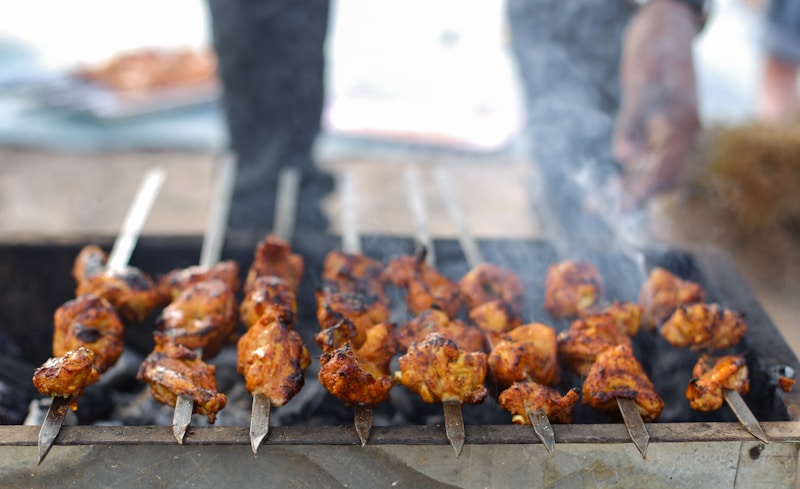
1. Choose grilled over doner. Shish (skewered and grilled chunks) and kofta (grilled minced meat) are almost always leaner than doner meat, which can include added fats to keep it moist on the rotisserie. If they offer grilled chicken breast or lamb chops, you’ve hit the jackpot.
2. Go heavy on the salad, light on the bread. That mountain of shredded lettuce, red cabbage, tomato, and onion isn’t just garnish — it’s fiber, antioxidants, and volume that fills you up for almost zero calories. Ask for extra salad. Skip the fries entirely, or share a small portion.
3. Be ruthless about sauces. Garlic sauce (toum) is basically emulsified oil and garlic — delicious but calorie-dense. Chili sauce is usually the better bet. And that white “burger sauce”? It’s mayo-based and can add 200+ calories in seconds. Ask for sauces on the side, or go with a squeeze of lemon and a sprinkle of sumac.
4. Know what “lamb doner” really means. In many shops, “lamb doner” is actually a mix of lamb and beef with added fat, breadcrumbs, and seasonings. This isn’t inherently bad — but if you’re watching saturated fat, ask if they have a pure chicken or lean beef option.
5. Watch your portion. Kebab shop portions tend to be generous. A “small” doner wrap is often enough for a full meal. If you’re getting a platter, save half for tomorrow’s lunch.
Food Safety: The Question Nobody Asks
There’s an elephant in the kebab shop, and it’s wearing a hairnet. The vertical rotisserie that makes doner kebab possible is also a food safety challenge. Meat that sits at warm temperatures for hours needs to be handled correctly — shaved from the outside, where it’s fully cooked, and never mixed with raw interior layers.
The Partnership for Food Safety Education highlights that as more people cook and eat at home, awareness of commercial food safety practices becomes crucial. Here’s what to look for:
- The shop should look clean, with staff wearing gloves and handling money separately from food.
- The rotisserie meat should be steaming hot and freshly shaved — not pre-sliced and sitting in a warming tray.
- Salad ingredients should be refrigerated or on ice, not sitting at room temperature.
- If something smells off, trust your nose. Foodborne illness is not worth the risk.
The Verdict
Your local kebab shop can absolutely be part of a healthy eating pattern — and compared to most fast-food options, it’s often the smartest choice on the street. A grilled chicken shish with extra salad, light on the sauce, is a high-protein, vegetable-forward meal that would make any Mediterranean diet advocate proud.
The key is intentionality. Don’t order on autopilot. Make the small swaps — grilled over doner, salad over fries, chili over mayo — and you can enjoy every bite without a side of guilt.
Because let’s face it: life is too short to say no to a good kebab. Just order the smart one.