CRISPR Gene Editing in 2026: From Lab to Clinic — Personalized Medicine Arrives
The CRISPR Revolution Accelerates: Personalized Gene Editing Arrives in the Clinic
In May 2025, a team of scientists achieved what many had considered years away: they developed, gained FDA approval for, and delivered a personalized CRISPR gene therapy to an infant with a life-threatening genetic disorder—all within six months. The patient, known as KJ, became the first person ever successfully treated with a bespoke, on-demand CRISPR therapy. One year later, the implications of that milestone are reverberating throughout medicine.
As 2026 unfolds, CRISPR gene editing is no longer a laboratory promise—it is a clinical reality reshaping treatment paradigms across genetic disorders, cancer, autoimmune diseases, and beyond. The pace of progress is breathtaking, and the question is no longer whether CRISPR will transform medicine, but how fast and for whom.
The KJ Case: A Blueprint for Personalized Gene Therapy
Published in The New England Journal of Medicine in May 2025, the case of KJ—an infant with carbamoyl phosphate synthetase I (CPS1) deficiency, a rare and often fatal urea cycle disorder—represented a historic milestone. Five researchers from the Innovative Genomics Institute collaborated to design a CRISPR therapy tailored to KJ’s specific genetic mutation. The treatment was packaged in lipid nanoparticles and administered by IV infusion.
The speed of development—from genetic diagnosis to FDA authorization to treatment in just six months—established a template for what personalized genetic medicine can achieve. “This was not just a scientific breakthrough,” said researchers involved in the case. “It demonstrated that truly individualized medicine is within reach.”
KJ’s one-year anniversary celebration included a trip to Washington, D.C., where the case was highlighted as proof that on-demand CRISPR therapies can work. The framework established for KJ is now being applied to other ultra-rare genetic disorders where conventional drug development—with its decade-long timelines and billion-dollar price tags—is simply not feasible.
Shrinking CRISPR: Solving the Delivery Problem
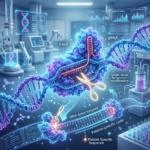
One of the most significant barriers to widespread CRISPR adoption has been delivery: how do you get the gene-editing machinery into the right cells inside a living human body? In 2026, a NIH-funded research team announced a breakthrough: the discovery of a naturally occurring enzyme, Al3Cas12f, that is dramatically smaller than the Cas9 enzyme used in first-generation CRISPR systems.
Why does size matter? The smaller enzyme fits into adeno-associated virus (AAV) vectors—the leading targeted delivery method for gene therapies. Traditional Cas9 is simply too large to be efficiently packaged into AAVs, limiting its in vivo applications. Al3Cas12f solves this problem. “Smart delivery of gene editing systems is a powerful notion with broad clinical implications, and this basic science finding takes us a significant step toward that future,” said Erica Brown, Ph.D., acting director of NIH’s National Institute of General Medical Sciences.
This enhanced delivery capability opens the door to treating conditions that require editing genes in tissues throughout the body—the liver, muscles, brain, and beyond—rather than just in cells that can be removed, edited in a lab, and returned to the patient.
Cancer: Breaking Through Drug Resistance
CRISPR’s applications in oncology took a meaningful step forward in 2026. Researchers at the ChristianaCare Gene Editing Institute demonstrated that CRISPR could successfully disrupt the NRF2 gene in head and neck cancer cells, restoring the effectiveness of chemotherapy in tumors that had stopped responding to treatment.
“Our goal was to break through the wall of drug resistance that so many patients face,” said Natalia Rivera-Torres, Ph.D., lead researcher on the project. Head and neck cancer is the seventh most common cancer worldwide, with cases projected to rise by 30% annually by 2030. The ChristianaCare team showed the same CRISPR approach worked in both head and neck cancer cells and esophageal cancer cells, suggesting broad applicability.
Meanwhile, CAR-T cell therapies enhanced by CRISPR are pushing into solid tumors—a frontier that has proven far more challenging than the blood cancers where CAR-T first proved its worth. CRISPR screens are identifying new therapeutic targets, and lessons from years of CAR-T experience in leukemia and lymphoma are informing the design of more potent, tumor-penetrating cell therapies.
The Expanding Clinical Trial Landscape
The scope of CRISPR clinical trials in 2026 is staggering. Beyond the well-known applications in sickle cell disease—where Casgevy (exagamglogene autotemcel) received FDA approval in late 2023 as the first CRISPR-based therapy—the pipeline now includes:
- Autoimmune diseases: Multiple trials are testing CRISPR-edited CAR-T cells to reset the immune system in refractory lupus, rheumatoid arthritis, and other autoimmune conditions.
- Type 1 diabetes: CRISPR Therapeutics’ CTX211, an immune-evasive, stem cell-derived beta-cell replacement therapy, is in Phase I/II trials, aiming to free patients from insulin dependence.
- Genetic disorders: Trials for Duchenne muscular dystrophy, chronic granulomatous disease, glycogen storage disease type Ia, primary hyperoxaluria, and many more are active or recruiting.
- Cardiovascular disease: A trial targeting refractory hypercholesterolemia aims to permanently lower cholesterol through a one-time liver edit.
- Infectious diseases: CRISPR is being explored as a tool to excise HIV from viral reservoirs, potentially enabling functional cures.
According to the Innovative Genomics Institute’s 2026 clinical trials update, the number of active CRISPR trials has more than doubled since 2023, with particularly strong growth in in vivo applications—where the editing happens inside the patient’s body rather than in a laboratory dish.
Safety, Ethics, and the Road Ahead
The CRISPR field has not been without tragedy. The first death associated with a CRISPR clinical trial occurred in a Duchenne muscular dystrophy patient treated by the nonprofit Cure Rare Disease. The case prompted soul-searching throughout the field and led to strengthened safety protocols for personalized gene therapies.
Ethical questions continue to surround germline editing—changes that can be passed to future generations—as well as equitable access to treatments that currently cost millions of dollars per patient. As CRISPR therapies move from rare diseases to more common conditions, these questions will only intensify.
Yet the trajectory is unmistakable. In 2026, CRISPR has moved decisively from promise to practice. The personalized therapy developed for KJ in six months would have been unthinkable five years ago. The shrinking of CRISPR enzymes to fit into standard delivery vectors has cleared a major technical hurdle. And the expansion into cancer, autoimmune disease, and cardiovascular conditions suggests that gene editing may ultimately touch far more medical specialties than anyone initially predicted.
The CRISPR revolution is no longer coming. It is here—and it is just getting started.